What are the classifications of zirconia powder?
2025-12-15
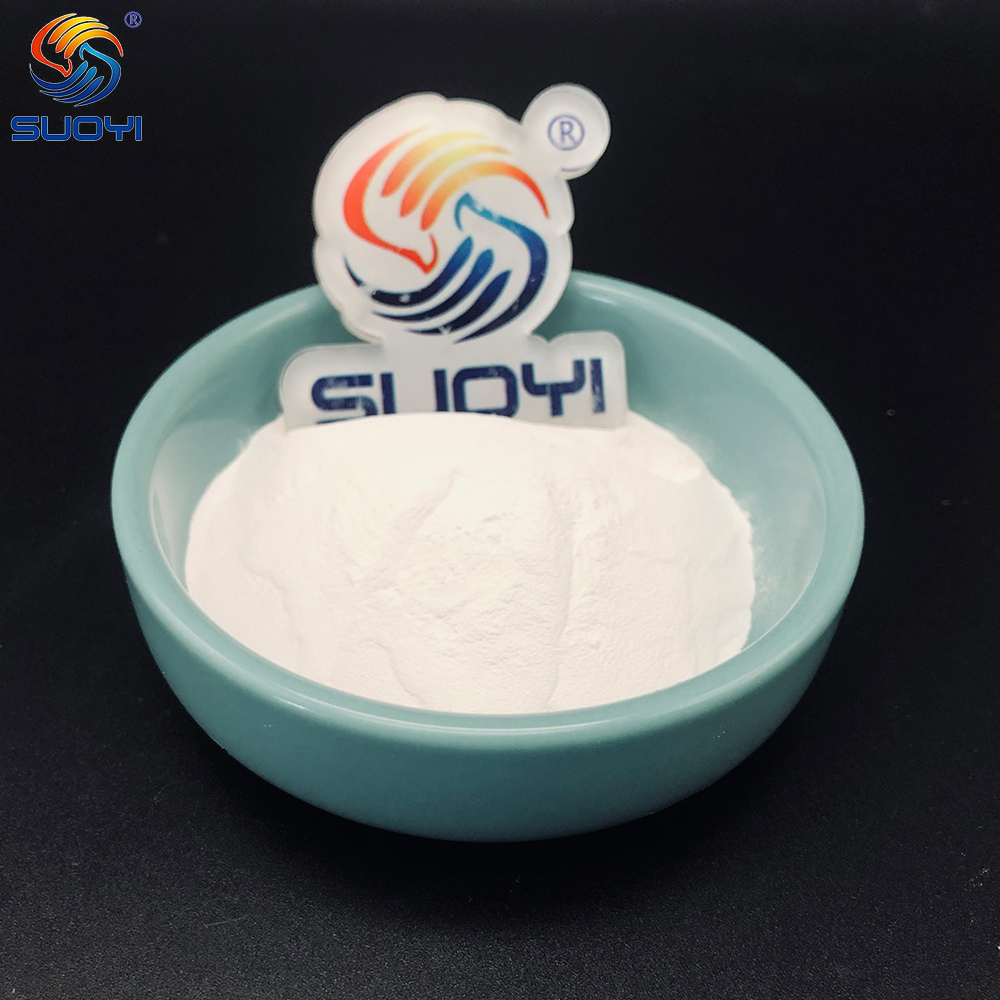
What are the classifications of zirconia powder?
1. Crystal Structure Classification:
* Monoclinic Zirconia (m-ZrO₂): Low-temperature stable phase, no practical engineering applications, but its crystal transformation is the basis for toughening.
* Tetragonal Zirconia (t-ZrO₂): Metastable phase, achieving high toughness and strength in zirconia ceramics through a "phase transformation toughening" effect, forming the basis for most engineering applications.
* Cubic Zirconia (c-ZrO₂): High-temperature stable phase, possessing oxygen ion conductivity, commonly used in oxygen sensors, solid oxide fuel cells, etc.
2. Stabilizer Classification:
* Partially Stabilized Zirconia: The most typical example is 3 mol% yttrium oxide-stabilized tetragonal zirconia. This is the most widely used type, combining high strength and high toughness, used in grinding media, structural components, etc.
* Partially Stabilized Zirconia: The most typical example is 3 mol% yttrium oxide-stabilized tetragonal zirconia. This is the most widely used type, combining high strength and high toughness, used in grinding media, structural components, etc.
* Fully Stabilized Zirconia: Such as cubic zirconia stabilized with more than 8 mol% yttrium oxide, possessing good oxygen ion conductivity, used in functional ceramics.
• Other stabilizing systems: Besides yttrium oxide (Y₂O₃), there are also magnesia (MgO), calcium oxide (CaO), and cerium oxide (CeO₂) stabilizing systems, each with different performance focuses.
Yttrium oxide-stabilized zirconia (YSZ) is the mainstream general-purpose type, with excellent toughness and processability. Cerium oxide-stabilized CSZ has good low-temperature toughness. Magnesium oxide-stabilized MSZ is resistant to high temperatures. Calcium oxide-stabilized CaSZ is low-cost and corrosion-resistant. Others include ZTA, ATZ, and Zr(OH)₄.
3. Particle size classification: Micron-sized (conventional sintering, low cost), submicron-sized (high forming precision), nano-sized (high density/high activity, suitable for precision components).
4. Forming process: Zirconia production processes (such as dry pressing, injection molding, 3D printing) directly determine whether granulated powder, airflow powder, or spherical powder is needed.
5. Application scenario classification: dental grade (high purity, excellent biocompatibility), electronic grade (low impurities, suitable for insulation/thermal conduction), structural component grade (high toughness, impact resistance), coating grade (good dispersibility, wear and corrosion resistance).
Suoyi Advantages of Strontium Carbonate Powder Applications Closely related to its high purity, high temperature stability, and high refractive index.
Suoyi Factory Manufactured Application Advantages of Industrial Yttrium Stabilized Zirconia Powder
Related Article

High Purity Spherical Yttrium Oxide Powder Y2O3 3N 4N 5N CAS1314-36-9 for Semiconductor Plasma Spray Coating
Spherical Yttria Y2O3 powder manufactured by spray granulation and high temperature sintering. Good flowability, high packing density, narrow PSD. Excellent resistance to fluorine plasma corrosion, widely used for semiconductor chamber coating, thermal spray, laser cladding, YSZ stabilizer, ceramic additive, 3D printing ceramic parts.
Spherical Yttria Y2O3 powder manufactured by spray granulation and high temperature sintering. Good flowability, high packing density, narrow PSD. Excellent resistance to fluorine plasma corrosion, widely used for semiconductor chamber coating, thermal spray, laser cladding, YSZ stabilizer, ceramic additive, 3D printing ceramic parts.
SUOYI Spherical Yttrium Oxide Powder Y₂O₃ Spherical Yttria Powder
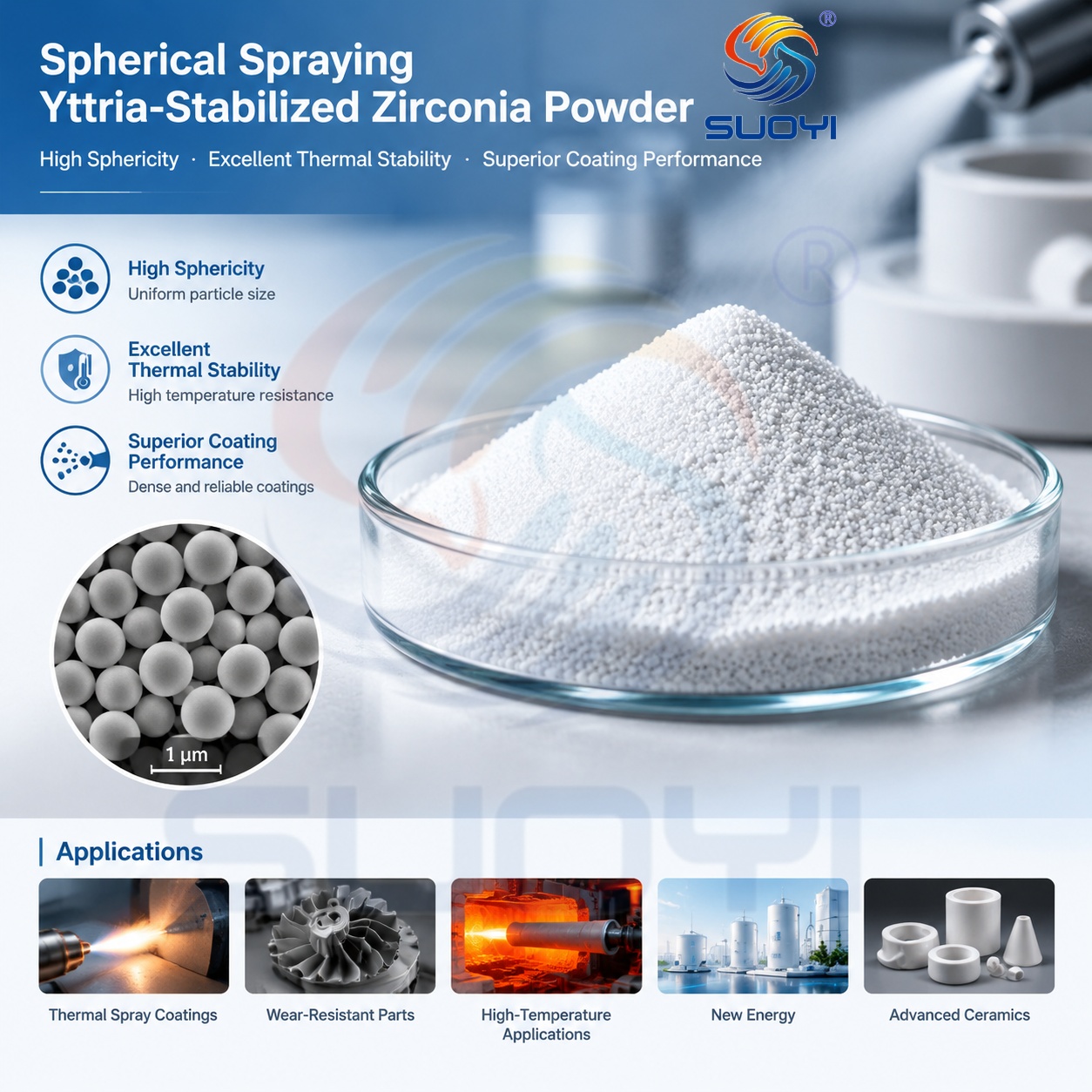
Spherical YSZ Powder
High Sphericity: Particles are perfectly solid spheres with excellent flowability, ensuring uniform and continuous powder feeding without nozzle clogging or bridging.
High Deposition Efficiency: The high apparent density and stable in-flight velocity of these spherical particles result in significantly higher deposition efficiency compared to crushed (angular) powders.
High Sphericity: Particles are perfectly solid spheres with excellent flowability, ensuring uniform and continuous powder feeding without nozzle clogging or bridging.
High Deposition Efficiency: The high apparent density and stable in-flight velocity of these spherical particles result in significantly higher deposition efficiency compared to crushed (angular) powders.
SUOYI Spherical Yttria-Stabilized Zirconia (YSZ) Powder for Thermal Spraying