Yttrium-Stabilized Zirconia Blocks for Dental Use: Redefining Oral Restoration
2025-12-24
Yttrium-Stabilized Zirconia Blocks for Dental Use: Redefining Oral Restoration
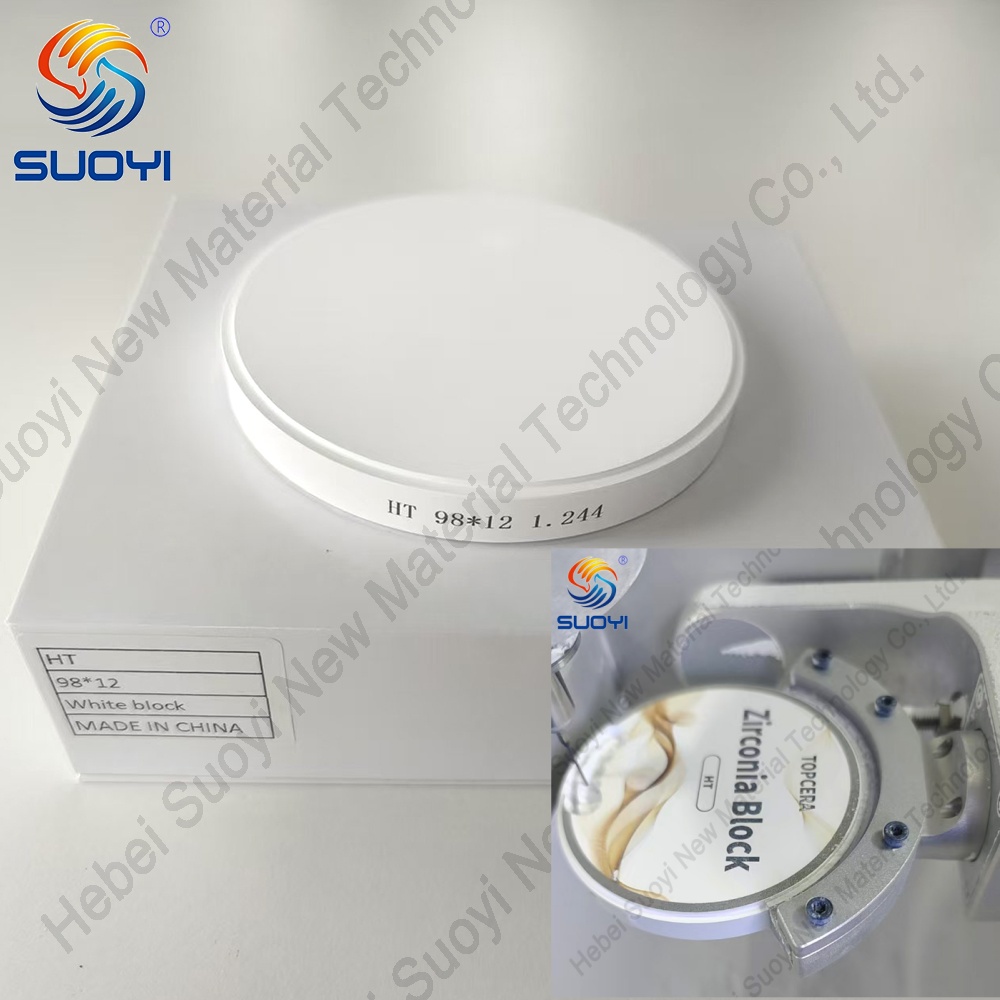
In the field of oral restoration, the performance of dental materials directly determines the quality and durability of the restoration. Yttrium-stabilized zirconia blocks (3YSZ, 4YSZ, 5YSZ), with their groundbreaking comprehensive performance, stand out from traditional restorative materials, becoming a trusted and favored "restorative tool" for dentists and patients, bringing a double leap in function and aesthetics to oral restoration.
1. Robust Mechanical Properties, Building a Solid Foundation for Durability Oral restorations need to withstand long-term chewing pressure, making strength and toughness the core tests. Yttrium-stabilized zirconia, precisely stabilized with 3% molar fraction of yttrium oxide, forms a stable tetragonal phase crystal structure, completely solving the crystal transformation problem of pure zirconia, achieving a qualitative leap in mechanical properties. Its flexural strength reaches 900-1200MPa, far exceeding the national standard requirement of 100MPa for dental materials, and is 5-10 times that of traditional ceramics, easily handling even the high-intensity chewing of the posterior teeth. Simultaneously, it possesses fracture toughness comparable to metals and ultra-high hardness, effectively resisting daily wear and tear and preventing brittle fracture. It also supports the fabrication of long bridge restorations with more than nine units, overcoming complex restoration challenges that traditional all-ceramic systems struggle with, significantly extending the lifespan of restorations.
2. Excellent Biocompatibility, Protecting Oral Health
The sensitivity of the oral environment places stringent requirements on the biocompatibility of restorative materials. Yttrium-stabilized zirconia, as an inorganic non-metallic material, has excellent biocompatibility. It is non-toxic, odorless, and chemically stable, causing no irritation or allergic reactions upon contact with oral tissues. It does not release harmful metal ions, fundamentally avoiding problems such as gingivitis and black lines on the gums that may be caused by traditional metal-ceramic crowns. Its surface properties promote gingival tissue adhesion and growth, significantly reducing the risk of peri-implantitis in implant abutment applications. Even with long-term implantation, it coexists harmoniously with the oral tissue, building a strong safety barrier for oral health.
The sensitivity of the oral environment places stringent requirements on the biocompatibility of restorative materials. Yttrium-stabilized zirconia, as an inorganic non-metallic material, has excellent biocompatibility. It is non-toxic, odorless, and chemically stable, causing no irritation or allergic reactions upon contact with oral tissues. It does not release harmful metal ions, fundamentally avoiding problems such as gingivitis and black lines on the gums that may be caused by traditional metal-ceramic crowns. Its surface properties promote gingival tissue adhesion and growth, significantly reducing the risk of peri-implantitis in implant abutment applications. Even with long-term implantation, it coexists harmoniously with the oral tissue, building a strong safety barrier for oral health.
3. Natural Aesthetic Presentation, Restoring the Feel of Original Teeth
Restorations should not only be practical but also invisible and natural. Yttrium-stabilized zirconia blocks possess ideal optical properties, with a light transmittance highly similar to natural tooth enamel. This allows for precise simulation of the natural color and translucent texture of teeth, avoiding the embarrassing "shiny blue" appearance of metal restorations under light. Its color stability is extremely high, unaffected by everyday foods such as coffee, tea, and soy sauce, maintaining its bright color even with long-term use, blending seamlessly with surrounding natural teeth. Whether for single crown restorations or multiple bridge restorations, it achieves a remarkably natural aesthetic effect, allowing patients to regain a confident smile.
Restorations should not only be practical but also invisible and natural. Yttrium-stabilized zirconia blocks possess ideal optical properties, with a light transmittance highly similar to natural tooth enamel. This allows for precise simulation of the natural color and translucent texture of teeth, avoiding the embarrassing "shiny blue" appearance of metal restorations under light. Its color stability is extremely high, unaffected by everyday foods such as coffee, tea, and soy sauce, maintaining its bright color even with long-term use, blending seamlessly with surrounding natural teeth. Whether for single crown restorations or multiple bridge restorations, it achieves a remarkably natural aesthetic effect, allowing patients to regain a confident smile.
4. Versatile Adaptability, Unlocking More Restorative Possibilities
Beyond its outstanding core performance, the adaptability of yttrium-stabilized zirconia blocks further highlights its comprehensive value. Its excellent corrosion resistance withstands the erosion of the acidic and alkaline environment in the oral cavity, maintaining stable performance over the long term. Furthermore, its metal-free composition does not interfere with medical examinations such as cranial X-rays, CT scans, and MRIs, avoiding the inconvenience and risks associated with restoration removal. In terms of application scenarios, it can flexibly adapt to various restorative needs, including full crowns, partial crowns, inlays, and implant abutments. It supports precise restoration of single teeth as well as reconstruction of complex dentition defects. Combined with digital processing technology, it can achieve personalized customization, making the restoration process more efficient and the results more precise.
Beyond its outstanding core performance, the adaptability of yttrium-stabilized zirconia blocks further highlights its comprehensive value. Its excellent corrosion resistance withstands the erosion of the acidic and alkaline environment in the oral cavity, maintaining stable performance over the long term. Furthermore, its metal-free composition does not interfere with medical examinations such as cranial X-rays, CT scans, and MRIs, avoiding the inconvenience and risks associated with restoration removal. In terms of application scenarios, it can flexibly adapt to various restorative needs, including full crowns, partial crowns, inlays, and implant abutments. It supports precise restoration of single teeth as well as reconstruction of complex dentition defects. Combined with digital processing technology, it can achieve personalized customization, making the restoration process more efficient and the results more precise.
From mechanical strength to biosafety, from aesthetic presentation to clinical fit, dental yttrium-stabilized zirconia blocks break through the limitations of traditional restorative materials with their comprehensive performance advantages. It is not only a core carrier for upgrading oral restoration technology, but also an ideal choice for dentists to achieve precise restorations and for patients to pursue a high-quality life, redefining the gold standard of oral restoration and ensuring that every restoration combines safety, durability, and natural beauty.
Choose the right dental zirconia blocks and get your dental teeth restorations off to a winning start!
Why do top dental labs and clinics choose this zirconia block?
Related Article

High Purity Spherical Yttrium Oxide Powder Y2O3 3N 4N 5N CAS1314-36-9 for Semiconductor Plasma Spray Coating
Spherical Yttria Y2O3 powder manufactured by spray granulation and high temperature sintering. Good flowability, high packing density, narrow PSD. Excellent resistance to fluorine plasma corrosion, widely used for semiconductor chamber coating, thermal spray, laser cladding, YSZ stabilizer, ceramic additive, 3D printing ceramic parts.
Spherical Yttria Y2O3 powder manufactured by spray granulation and high temperature sintering. Good flowability, high packing density, narrow PSD. Excellent resistance to fluorine plasma corrosion, widely used for semiconductor chamber coating, thermal spray, laser cladding, YSZ stabilizer, ceramic additive, 3D printing ceramic parts.
SUOYI Spherical Yttrium Oxide Powder Y₂O₃ Spherical Yttria Powder
Spherical YSZ Powder
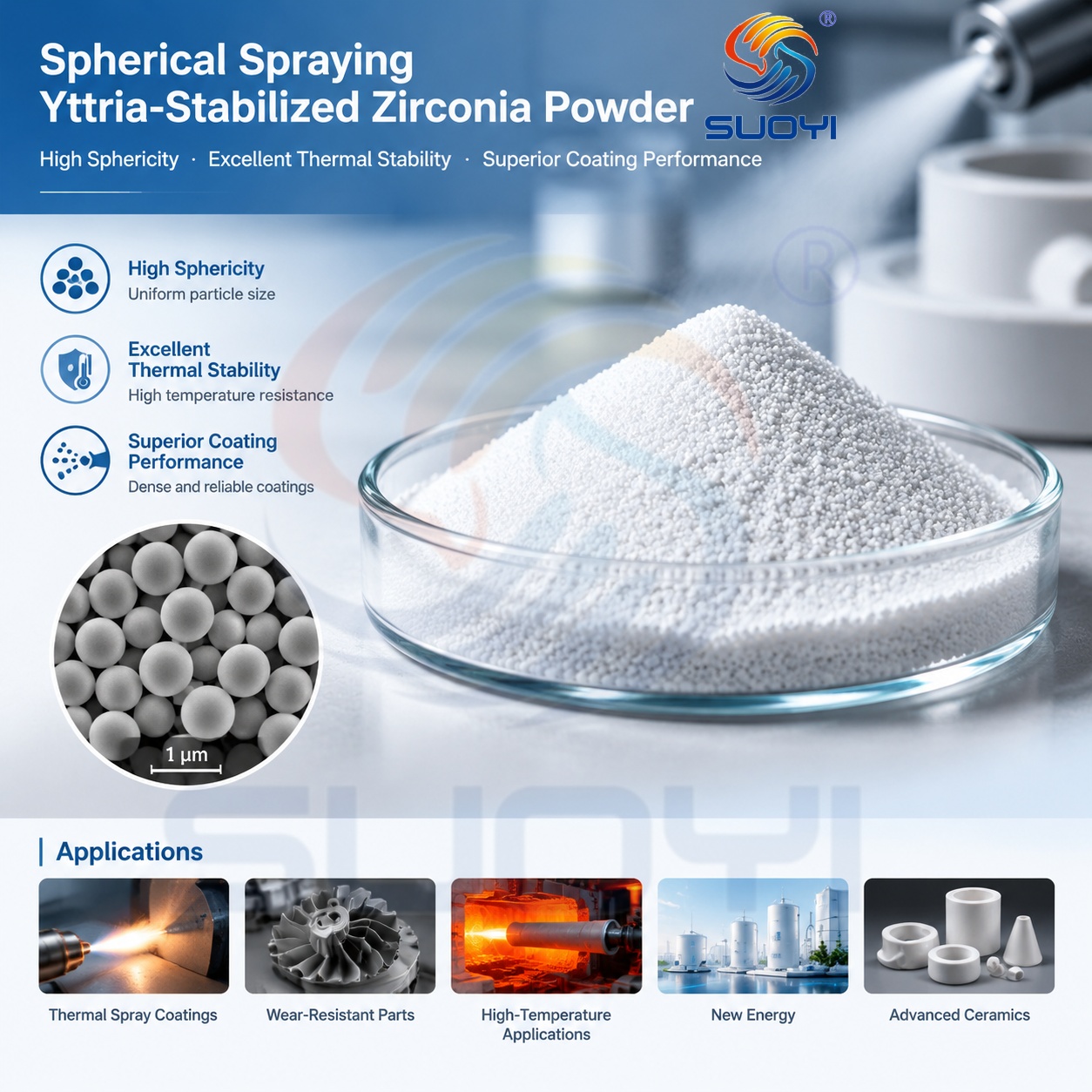
High Sphericity: Particles are perfectly solid spheres with excellent flowability, ensuring uniform and continuous powder feeding without nozzle clogging or bridging.
High Deposition Efficiency: The high apparent density and stable in-flight velocity of these spherical particles result in significantly higher deposition efficiency compared to crushed (angular) powders.
High Sphericity: Particles are perfectly solid spheres with excellent flowability, ensuring uniform and continuous powder feeding without nozzle clogging or bridging.
High Deposition Efficiency: The high apparent density and stable in-flight velocity of these spherical particles result in significantly higher deposition efficiency compared to crushed (angular) powders.
SUOYI Spherical Yttria-Stabilized Zirconia (YSZ) Powder for Thermal Spraying