Differences between Silicon Oxide and Nanosilica Powder?

Differences between Silicon Oxide and Nanosilica Powder

Differences between Silicon Oxide and Nanosilica Powder
Silicon oxide generally refers to silicon dioxide (SiO₂), commonly micron‑sized silicon oxide; nanosilica is silicon dioxide with particle size reduced to nanoscale. The main differences lie in particle size, specific surface area, physical properties, applications and price.
1. Particle Size and Morphology
Conventional silicon oxide powder
Particle size: 1‑100 μm (micron) with large particles.
Mostly coarse‑crystalline quartz powder or precipitated silica, low agglomeration, visible white coarse powder to naked eyes.
Nanosilica powder (nano‑silicon dioxide)
Particle size: 1‑100 nm (nanometer). Fumed nanosilica commonly ranges from 7‑40 nm.
Extremely fine primary particles, heavy tendency to agglomerate. Fluffy and low‑density; same weight occupies much larger volume than conventional silicon oxide.
2. Specific Surface Area (Key Difference)
‑ Conventional silicon oxide: Low specific surface area, usually several to dozens of m²/g.
‑ Nanosilica: Extremely high specific surface area, 100‑400 m²/g or even higher.
Specific surface area directly determines reinforcing, adsorption, thickening and thixotropic performance.
3. Surface Activity
‑ Conventional silicon oxide: Few surface hydroxyl groups, high chemical inertness, weak bonding with resins and rubber.
‑ Nanosilica: Abundant surface silanol groups (‑Si‑OH) with high surface activity. Can be hydrophobically modified via silane coupling agents, divided into hydrophilic type and hydrophobic type nano‑SiO₂.
4. Physical Properties
Dispersibility
Conventional silicon oxide: Easy to disperse by simple stirring.
Nanosilica: Primary particles are tiny and prone to hard agglomeration. High‑speed dispersion or sand‑milling is required; otherwise agglomerates turn into large particles and lose nano‑effects.
Oil absorption value
Conventional silicon oxide: Low oil absorption value.
Nanosilica: High oil absorption value, consumes more resin matrix.
Optical property
Nanosilica can achieve high transparency for transparent coatings; conventional micron‑sized silicon oxide causes whitening and matting effect.
5. Functional Performance
Conventional silicon oxide (micron SiO₂)
Main functions: Filling, cost reduction, wear‑resistance and hardness improvement; poor reinforcing capacity.
Applications: Plastic fillers, floor materials, ceramics, general coatings, refractory materials.
Nanosilica
Possesses nano‑effects: reinforcement & toughening, thickening & thixotropy, anti‑sedimentation, scratch‑resistance, high transparency, enhanced insulation and barrier properties.
Applications: Silicone rubber reinforcement, adhesives, printing inks, polishing slurries, coatings, composite materials, lithium‑ion batteries, polishing media, cosmetics.
6. Cost
Conventional silicon oxide: Low cost.
Nanosilica: Much higher cost. Fumed nanosilica is more expensive than precipitated nanosilica.
6. Cost
Conventional silicon oxide: Low cost. Nanosilica: Much higher cost. Fumed nanosilica is more expensive than precipitated nanosilica.
| Items | Conventional Silicon Oxide Powder | Nanosilica Powder |
|---|---|---|
| Particle Size | Micron‑scale 1‑100 μm | Nano‑scale 1‑100 nm |
| Specific Surface Area | Low, <50 m²/g | High, 100‑400+ m²/g |
| Surface Silanol Groups | Few | Abundant, available for hydrophobic modification |
| Agglomeration | Slight | Heavy agglomeration, difficult dispersion |
| Main Functions | Filling, cost‑down, wear resistance | Reinforcement, thickening, thixotropy, high transparency, toughening |
| Typical Applications | Ceramics, flooring, general fillers | Silicone rubber, adhesives, polishing slurry, high‑end coatings |
| Cost | Low | High |
Supplementary Note
Many commercially‑labelled “nanosilica” products actually form micron‑sized secondary agglomerated particles. Poor dispersion will make its performance close to ordinary silicon oxide. When purchasing, refer to BET specific surface area instead of merely nominal primary particle size.
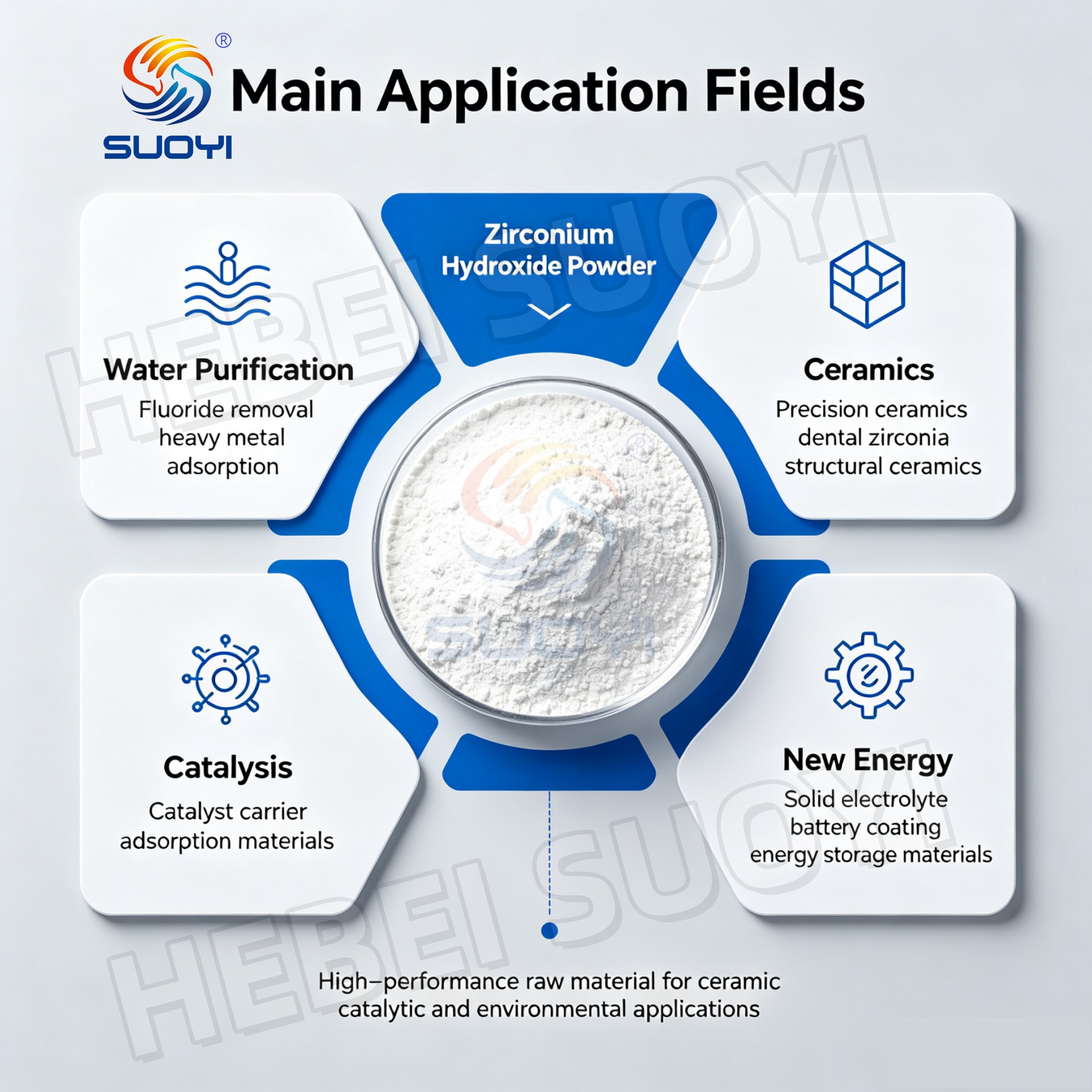
What is zirconium hydroxide powder used for?
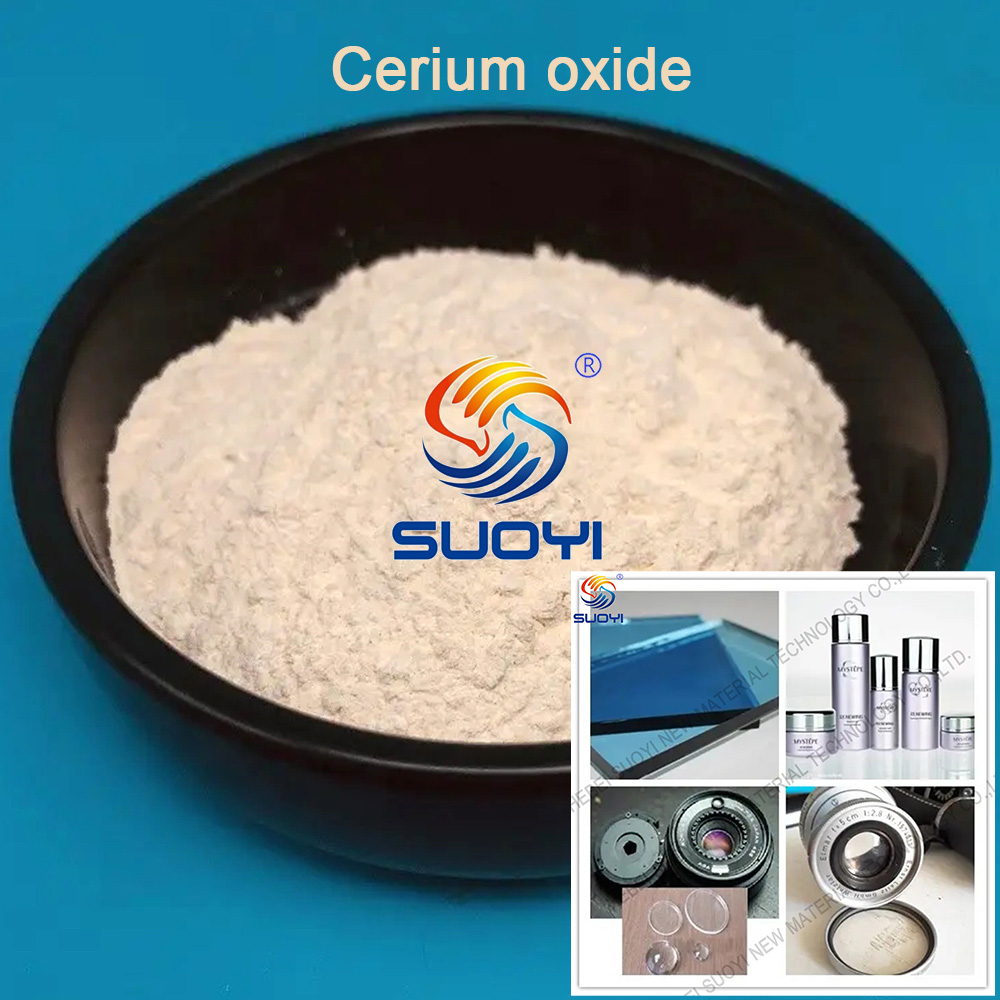
Cerium oxide is an inorganic substance with the chemical formula CeO2 and a light yellow or yellowish brown powder.