Cerium oxide is an inorganic substance with the chemical formula CeO2 and a light yellow or yellowish brown powder.
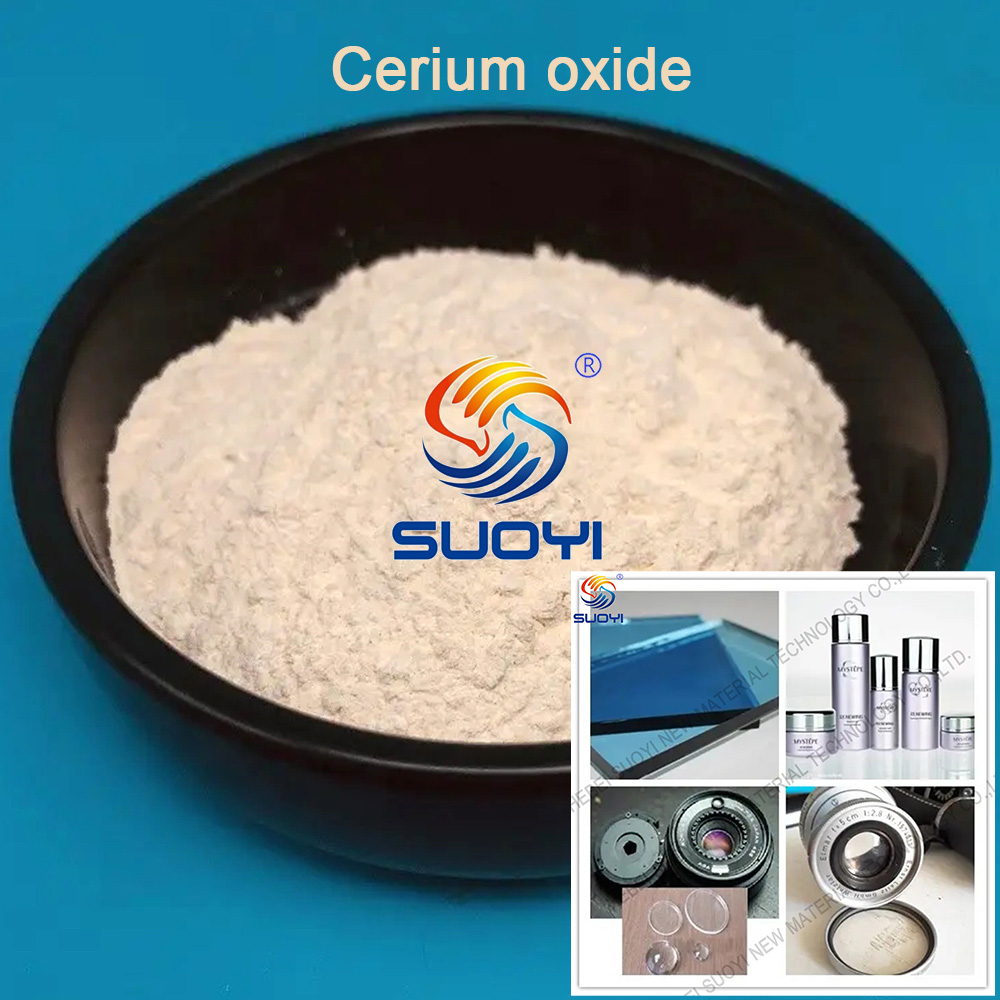
Cerium oxide is an inorganic substance with the chemical formula CeO2 and a light yellow or yellowish brown powder. Density 7.13g/cm3, melting point 2397 ℃, insoluble in water and alkali, slightly soluble in acid. At a temperature of 2000 ℃ and a pressure of 15MPa, Cerium(III) oxide can be obtained by reducing cerium oxide with hydrogen. When the temperature is free at 2000 ℃ and the pressure is free at 5MPa, the cerium oxide is slightly yellow, slightly red, and pink. Its performance is to be used as polishing materials, catalysts, catalyst carriers (additives), ultraviolet absorbers, fuel cell electrolytes, automotive exhaust absorbers, Electroceramics, etc.
Cerium(III) oxide (Ce203) and Cerium(IV) oxide. There are quite a number of oxide phases between Cerium(III) oxide and Cerium(IV) oxide, which are unstable. Cerium(IV) oxide is the most important and representative cerium oxide. Having a fluorite structure. Pure product
White heavy powder or cubic crystal, impure products are light yellow or even pink to reddish brown due to the presence of trace amounts of lanthanum, praseodymium, etc. Melting point 2600 ℃. Insoluble in water. Difficult to dissolve in sulfuric acid and nitric acid. Almost insoluble in water and acids. Relative density 7.132. Toxic. Cerium(III) oxide has the hexagonal structure of rare earth Sesquioxide. Melting point 2210 ℃; Boiling point 3730 ℃, mainly used as a catalyst.
According to purity, it can be divided into: low purity: purity not higher than 99%, high purity: 99.9%~99.99%, ultra-high purity: above 99.999%
Classified by particle size: coarse powder, micron level, submicron level, nano level
Safety instructions: The product is toxic, odorless, non irritating, safe and reliable, with stable performance, and does not react with water and organic matter. It is a high-quality glass clarifier, decolorizer, and chemical additive.
Oxidizing agents. Catalysts for Organic reaction. Use rare earth metal standard samples for steel analysis. Redox titration analysis. Discolored glass. Glass enamel sunshade. Heat resistant alloy.
Used as an additive in the glass industry, as a grinding material for plate glass, and also as a UV resistant agent in cosmetics. At present, it has been expanded to the grinding of glasses, optical lenses, and picture tubes, playing a role in decolorization, clarification, UV absorption of glass, and absorption of electronic lines. Also used as an anti reflective agent for Chemicalbook glasses, it is made with cerium to produce cerium titanium yellow, which gives the glass a light yellow color. Used as a piezoelectric ceramic penetrating agent in ceramic glaze and electronic industry. It is also used to manufacture highly active catalyst, incandescent cover of Gas lighting and fluorescent screen for X-ray.
Cerium oxide polishing powder is widely used in glass polishing, with the advantages of strong cutting force, short polishing time, long service life, and high polishing accuracy. Light yellow or yellow powder
The main component of cerium oxide polishing powder is Cerium(IV) oxide (CeO2), followed by Lanthanum oxide (La2O3), praseodymium oxide (Pr2O3), Lanthanum trifluoride (LaOF), and in addition, it also contains trace silicon oxide, aluminum oxide, and Calcium oxide
Application area
Due to its superior chemical and physical properties, cerium based rare earth polishing powders have been widely used in industrial product polishing, such as polishing various optical glass devices, television picture tubes, optical glasses, oscilloscope tubes, flat glass, semiconductor wafers, and metal precision products.
High cerium rare earth polishing powder is mainly suitable for high-speed polishing of precision optical lenses. The performance of this polishing powder is excellent, and the polishing effect is good. Due to its high price, its usage in China is relatively small. The medium cerium rare earth polishing powder is mainly suitable for high-speed polishing of medium precision small spherical lenses of Optical instrument. Compared with the high cerium powder, this polishing powder can reduce the liquid concentration of the polishing powder by 11%, increase the polishing rate by 35%, improve the smoothness of products by one level, and increase the service life of the polishing powder by 30%. At present, the amount of polishing powder used in China is still small, and it needs to be further developed for new uses in the future. Low cerium rare earth polishing powder, suitable for polishing television tubes, eyeglass lenses, and flat glass. In addition, other polishing powders are used for polishing Optical instrument, cameras, camera lenses, etc. This kind of polishing powder is used most in China, about 85% of the total domestic consumption.
Cerium(III) oxide (Ce203) and Cerium(IV) oxide. There are quite a number of oxide phases between Cerium(III) oxide and Cerium(IV) oxide, which are unstable. Cerium(IV) oxide is the most important and representative cerium oxide. Having a fluorite structure. Pure product
White heavy powder or cubic crystal, impure products are light yellow or even pink to reddish brown due to the presence of trace amounts of lanthanum, praseodymium, etc. Melting point 2600 ℃. Insoluble in water. Difficult to dissolve in sulfuric acid and nitric acid. Almost insoluble in water and acids. Relative density 7.132. Toxic. Cerium(III) oxide has the hexagonal structure of rare earth Sesquioxide. Melting point 2210 ℃; Boiling point 3730 ℃, mainly used as a catalyst.
According to purity, it can be divided into: low purity: purity not higher than 99%, high purity: 99.9%~99.99%, ultra-high purity: above 99.999%
Classified by particle size: coarse powder, micron level, submicron level, nano level
Safety instructions: The product is toxic, odorless, non irritating, safe and reliable, with stable performance, and does not react with water and organic matter. It is a high-quality glass clarifier, decolorizer, and chemical additive.
Oxidizing agents. Catalysts for Organic reaction. Use rare earth metal standard samples for steel analysis. Redox titration analysis. Discolored glass. Glass enamel sunshade. Heat resistant alloy.
Used as an additive in the glass industry, as a grinding material for plate glass, and also as a UV resistant agent in cosmetics. At present, it has been expanded to the grinding of glasses, optical lenses, and picture tubes, playing a role in decolorization, clarification, UV absorption of glass, and absorption of electronic lines. Also used as an anti reflective agent for Chemicalbook glasses, it is made with cerium to produce cerium titanium yellow, which gives the glass a light yellow color. Used as a piezoelectric ceramic penetrating agent in ceramic glaze and electronic industry. It is also used to manufacture highly active catalyst, incandescent cover of Gas lighting and fluorescent screen for X-ray.
Cerium oxide polishing powder is widely used in glass polishing, with the advantages of strong cutting force, short polishing time, long service life, and high polishing accuracy. Light yellow or yellow powder
The main component of cerium oxide polishing powder is Cerium(IV) oxide (CeO2), followed by Lanthanum oxide (La2O3), praseodymium oxide (Pr2O3), Lanthanum trifluoride (LaOF), and in addition, it also contains trace silicon oxide, aluminum oxide, and Calcium oxide
Application area
Due to its superior chemical and physical properties, cerium based rare earth polishing powders have been widely used in industrial product polishing, such as polishing various optical glass devices, television picture tubes, optical glasses, oscilloscope tubes, flat glass, semiconductor wafers, and metal precision products.
High cerium rare earth polishing powder is mainly suitable for high-speed polishing of precision optical lenses. The performance of this polishing powder is excellent, and the polishing effect is good. Due to its high price, its usage in China is relatively small. The medium cerium rare earth polishing powder is mainly suitable for high-speed polishing of medium precision small spherical lenses of Optical instrument. Compared with the high cerium powder, this polishing powder can reduce the liquid concentration of the polishing powder by 11%, increase the polishing rate by 35%, improve the smoothness of products by one level, and increase the service life of the polishing powder by 30%. At present, the amount of polishing powder used in China is still small, and it needs to be further developed for new uses in the future. Low cerium rare earth polishing powder, suitable for polishing television tubes, eyeglass lenses, and flat glass. In addition, other polishing powders are used for polishing Optical instrument, cameras, camera lenses, etc. This kind of polishing powder is used most in China, about 85% of the total domestic consumption.
Differences between Silicon Oxide and Nanosilica Powder?