



Model No: P54879158
CeO2 glass polishing powder cerium oxide
Cerium oxide For polishing
CeO₂ / Cerium Oxide Glass Polishing Powder
Cerium Oxide Polishing Powder
CAS: 1306-38-3
MF: CeO₂
CeO₂ / Cerium Oxide Glass Polishing Powder
Cerium Oxide Polishing Powder
CAS: 1306-38-3
MF: CeO₂
minimum order :
1
Quantity :
CNY120.00 - CNY120.00
- Min. Order:1
- Color:Light yellow
- Specification Code:SYCE
- Specification Description:-
Cerium oxide For polishing
CeO₂ / Cerium Oxide Glass Polishing Powder
Cerium Oxide Polishing Powder
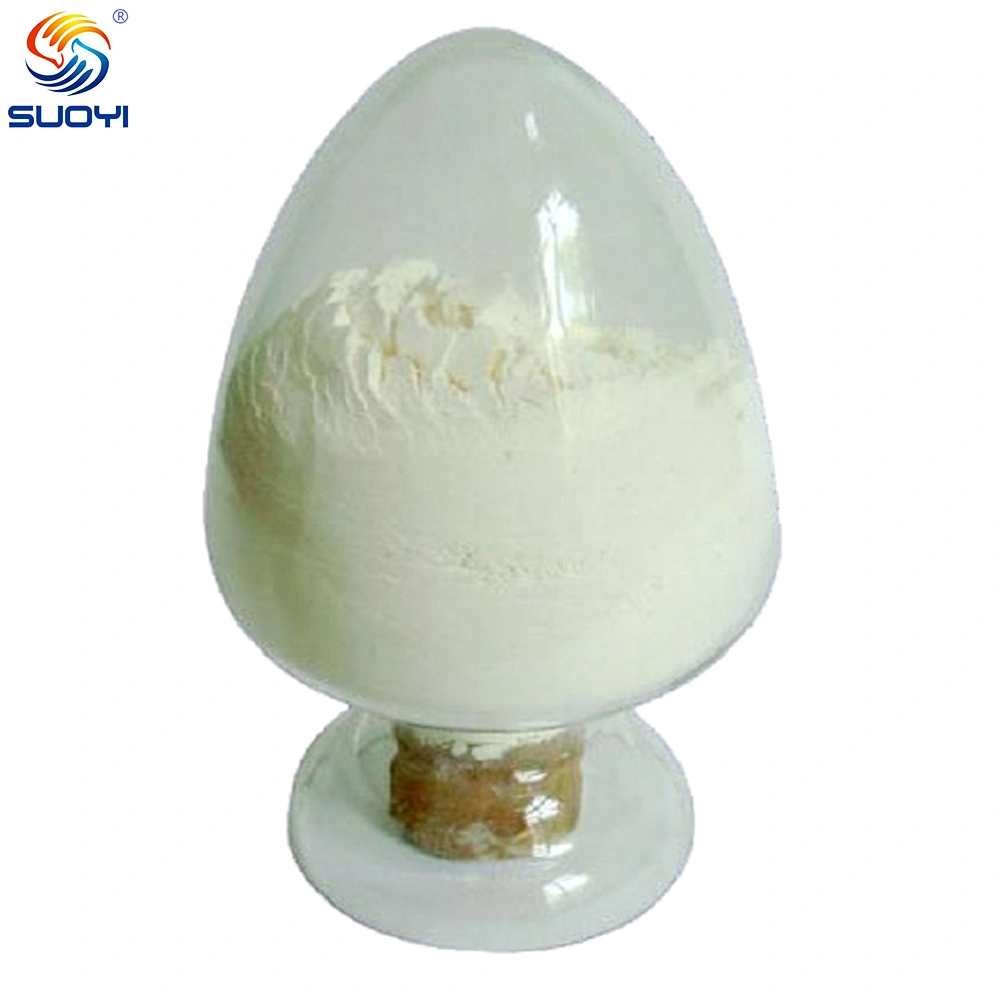
CAS: 1306-38-3
MF: CeO₂
Cerium dioxide, cerium oxide polishing powder (rare-earth polishing powder)
Combines mechanical abrasion with chemical polishing (CMP effect on silica glass); features fast material removal, high gloss, and minimal scratching.
Grades: Red/pink (high removal rate, cost-effective); White/high-purity (fine finish, low staining).
D50 particle size range: 0.4–3.5 μm (customizable).
CeO₂ content: 65%, 70%, 75%, 80%, or high-purity (99.5%+).
pH: 6.5–7.5; easy to clean, leaves minimal residue.
Cerium oxide polishing powder (chemical formula: CeO₂; CAS: 1306-38-3)—also known as cerium dioxide or rare-earth polishing powder—is an inorganic abrasive material primarily composed of the oxide of the rare-earth element cerium. Unlike conventional abrasives that rely solely on mechanical cutting, cerium oxide acts on silica-based (SiO₂) glass through a dual mechanism: mechanical abrasion and chemical softening. While the abrasive particles physically cut the glass surface, the cerium ions interact chemically with the glass network at the interface, softening the surface silicon-oxygen structure and facilitating its removal. This synergistic process—combining mechanical abrasion and chemical polishing—creates an effect similar to CMP (Chemical Mechanical Polishing). Consequently, it offers high cutting speeds, superior gloss, and fewer scratches, making it an indispensable functional material for precision glass finishing.
The synergy between mechanical abrasion and chemical polishing is the core advantage that distinguishes cerium oxide polishing powder from standard abrasives like aluminum oxide or zirconium oxide. Purely mechanical abrasives rely on hardness and pressure to forcibly remove material; this often leaves deep mechanical scratches on the surface, and removal efficiency becomes limited as the material's hardness increases. In contrast, cerium oxide (CeO₂) utilizes chemical action to reduce the resistance encountered during the removal of the glass surface layer. This allows the grinding/polishing process to occur under gentler conditions, ensuring a high removal rate while simultaneously achieving a mirror-like surface finish.
Furthermore, the product offers the following performance characteristics: high cutting efficiency, making it suitable for batch processing scenarios that demand high removal rates; a high-gloss, mirror-like finish after polishing; minimal scratching and pitting, which preserves the imaging quality of optical components; a near-neutral pH range (6.5–7.5), ensuring low corrosivity toward equipment and the operating environment; and ease of cleaning post-polishing, with minimal residue, thereby reducing the burden on subsequent cleaning stages.
Red or pink grades: Characterized primarily by a high removal rate and excellent cost-effectiveness. These are ideal for applications requiring high efficiency where surface precision requirements are relatively flexible—such as architectural glass, general glassware, or rough and intermediate polishing stages.
White high-purity grades: Featuring higher purity and lower impurity content, these grades produce a refined surface with uniform gloss. They are less prone to causing contamination or staining, making them suitable for precision polishing processes—such as those for optical lenses or display glass—that demand strict surface quality and cleanliness.
Regarding particle size, the D50 (median particle diameter) can be customized between 0.4 μm and 3.5 μm. Smaller particle sizes result in lower surface roughness, making them suitable for precision and ultra-precision polishing; larger particle sizes offer higher removal rates, ideal for rough polishing or rapid surface repair. Users can select the appropriate particle size based on the surface condition left by the preceding process and the target roughness; alternatively, multiple particle sizes can be combined to create a comprehensive process chain, ranging from rough to precision polishing.
In terms of purity, the CeO₂ content is available in various grades, including 65%, 70%, 75%, 80%, and high-purity versions exceeding 99.5%. Higher concentration implies a greater proportion of active polishing components, which enhances polishing efficiency and surface uniformity while reducing the risk of introducing impurities. High-purity grades are primarily intended for applications highly sensitive to contamination, such as optics, semiconductors, and precision ceramics.
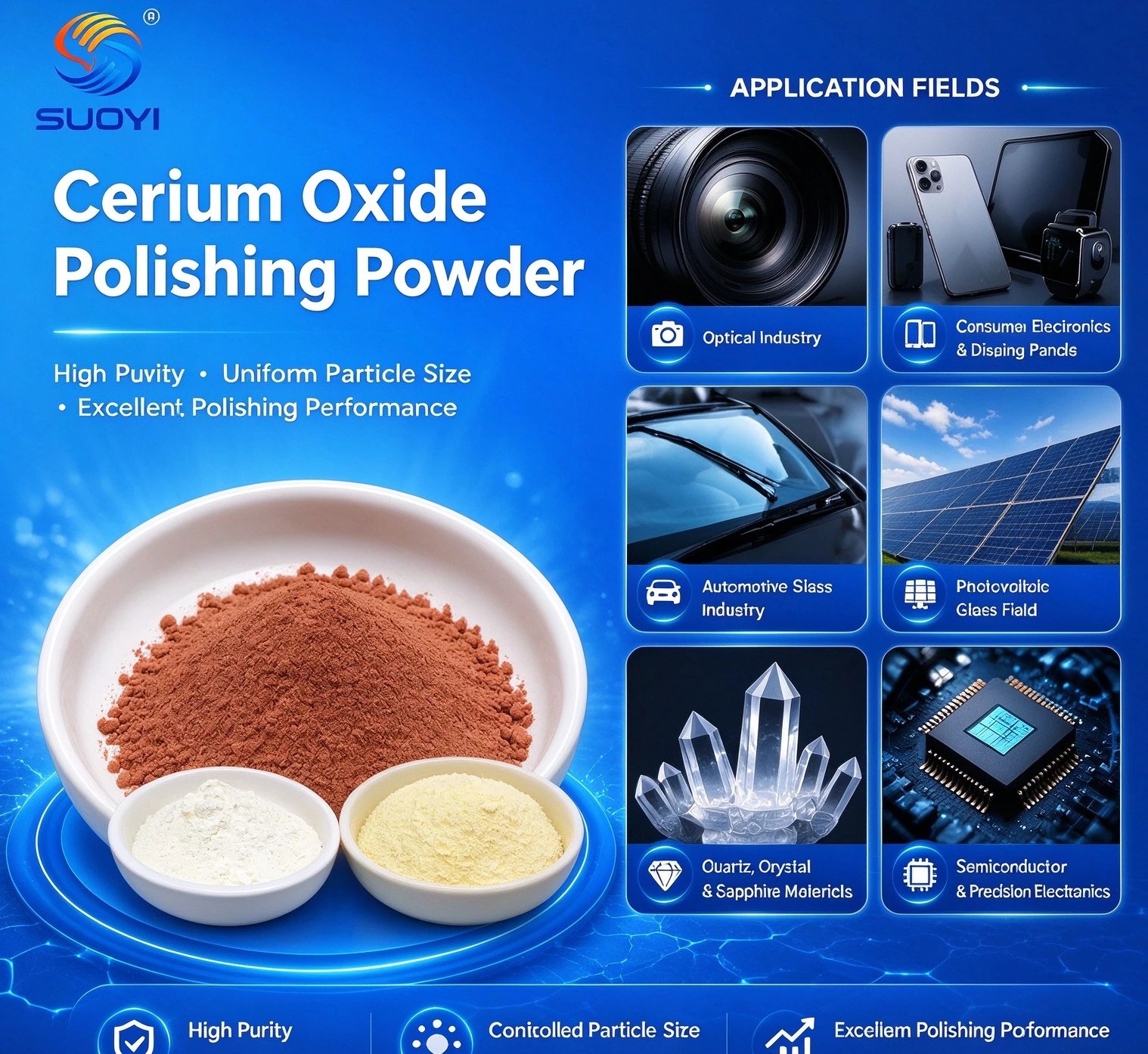
Cerium Oxide Applications
Automotive windshield & tempered glass scratch restoration
Optical glass: K9/BK7 lenses, prisms, eyeglass lenses, and camera lenses
Display glass: mobile phone cover glass, LCD/ITO substrates
Architectural glass, mirrors, crystal, and jade polishing
Chemical-Mechanical Polishing (CMP) of precision ceramics
In the automotive sector, cerium oxide is used to repair surface scratches on windshields and tempered glass. Such applications require restoring transparency without damaging the glass substrate or causing optical distortion—a requirement perfectly met by the synergistic chemical-mechanical action of cerium oxide.
In the field of optical glass, it is suitable for polishing lenses, prisms, eyeglass lenses, and camera lenses made from common optical materials like K9 and BK7. Optical components demand extremely high standards for surface roughness, form accuracy, and light transmission; consequently, high-purity white-grade cerium oxide with fine particle sizing is the preferred choice.
For display glass, it is used to polish mobile phone cover glass, LCD substrates, and ITO-coated conductive glass. These substrates require exceptional surface flatness and cleanliness; since any polishing residue can directly impair subsequent coating processes and display performance, the ability to achieve a low-residue, easy-to-clean surface is critical.
Other applications include the polishing of architectural glass, mirrors, crystal, and jade, as well as the CMP processing of precision ceramics. Precision ceramics are widely used in electronics and structural components, where surface flatness directly influences assembly precision and operational performance; in these contexts, cerium oxide polishing powder serves as a functional component within CMP slurries.










Comprehensive score